chatterjee@zesttex.com
 +91 9831747565





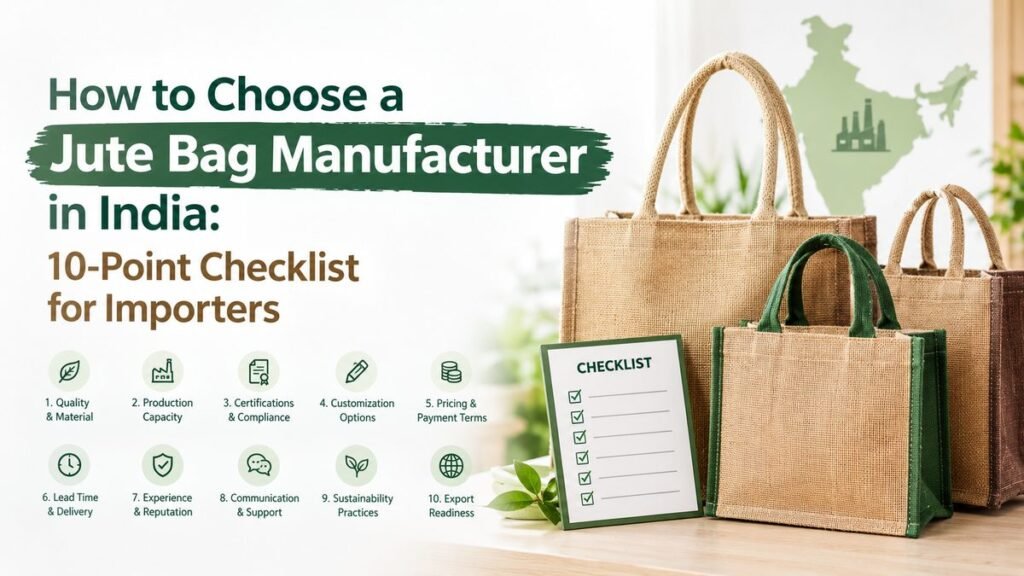
Importers face a big choice when they source natural bags. The right partner protects your brand and your budget. This guide shows how to choose a jute bag manufacturer with confidence. Buyers worldwide want eco friendly packaging, so demand for jute keeps growing. However, quality differs from one jute bags manufacturer in India to the next. Many importers search for a jute bag supplier India offers. Few know what to check. Use this checklist to compare suppliers side by side.
Why Importers Choose a Jute Bags Manufacturer in India
India ranks among the world’s top jute producers. Therefore, a jute bags manufacturer in India can keep costs low from fibre to bag. Shorter supply chains also cut delays. As a result, buyers get steadier prices and faster shipments.
Jute is biodegradable and reusable. Retailers use it to replace single-use plastic. Consequently, brands that sell jute bags earn trust from green shoppers.
Why Location Matters: Jute Bag Manufacturer in West Bengal
West Bengal sits at the heart of India’s jute belt. A jute bag manufacturer in West Bengal buys fibre close to the mills. Similarly, a jute bags manufacturer in Kolkata sits near a major export port. That access speeds up shipping and keeps schedules tight.
Local artisans in the region also bring decades of weaving skill. Their experience shows in precise stitching and neat finishes.
10-Point Checklist to Verify a Jute Bag Supplier
Follow these ten steps before you place a bulk order. Each step protects you from costly mistakes. Moreover, this checklist to verify a jute bag supplier works for first-time and repeat buyers. Print this list and tick each point as you go.
1. Check Export Experience
Start with the supplier’s track record. A seasoned jute bags exporter understands customs papers, packing rules, and buyer standards. Ask how many countries the company serves. Then call two past buyers.
The best jute bags exporters in India share references on request. In addition, read Google reviews and B2B platform ratings. Longer experience usually means fewer errors.
2. Verify Registrations and Certifications
Real companies hold real paperwork. Ask for the Importer Exporter Code and check it on the DGFT website. Next, confirm the GST number on the official GST portal. Then look up the Udyam registration on the MSME portal.
In addition, ask about audits and eco friendly production practices. Each document should carry the same company name.
3. Take a Video Factory Tour
Photos can mislead, but a live video shows the truth. Ask the team to walk you through the factory. Look for stitching lines, stock rooms, and packing areas.
Moreover, match the address on screen with maps and registration papers. A real factory welcomes this request.
4. Confirm Raw Material Quality
Good bags start with good fibre. Ask where the supplier buys its jute and how it grades the fibre. An eco friendly jute bags manufacturer should offer 100% natural, biodegradable material. Also, check for strong stitching and even weaving. Weak fibre tears under heavy loads.
5. Review Product Range and Private Label Options
A wide range signals skill. Look for shopping bags, promotional bags, pouches, and wine bags. In addition, ask about blends such as juco. Because you may expand later, pick a partner that can grow with you.
Strong brands need custom bags. A jute bags manufacturer with private label services prints your logo and matches your colours. For instance, ask about screen printing, heat transfer, and woven labels. Meanwhile, confirm who owns the artwork files.
6. Compare Minimum Order and Pricing
Prices change with volume. Therefore, request a clear quote for jute bags wholesale India orders. Ask about the minimum order quantity for each style. Besides, compare what each price includes, such as printing and packing. Cheap quotes often hide weak materials.
7. Check Payment Terms and Bank Details
Safe payment terms protect your cash. Ask for the company’s bank details in writing. The account name must match the registered company name. Therefore, avoid personal accounts and sudden changes in bank details.
Never pay the full amount before you see samples. Many exporters accept a part advance and a balance before shipping. Compare these terms across suppliers. Also, confirm the currency and bank charges in the quote.
8. Inspect Quality Control
Quality checks catch faults before shipping. Ask whether staff inspect goods after stitching and before packing. Likewise, request a sample inspection report. As a result, you avoid surprises when the container arrives. Strong checks also mean fewer returns.
9. Test Samples First
Never judge by photos alone. Order a sample and test its strength, print, and finish. Load it with weight to test the handles. Then compare it with the approved design. Note every flaw you find. Finally, share feedback before mass production.
10. Confirm Lead Time and Communication
Late orders hurt sales. Ask for a written production schedule. Besides, confirm who handles shipping and export papers. Because seasonal demand peaks in the fourth quarter, book your slot in advance. A late shipment can miss your festive sales window.
A good partner answers fast. Notice how soon the team replies to your first email. Furthermore, check whether they offer calls or WhatsApp support. Clear communication prevents errors, so trust your first impression.
Quick Verification Table
Use this table as a one-page scorecard for each supplier.
| Point | What to check | Proof to request |
|---|---|---|
| 1 | Export experience | Buyer references and export country list |
| 2 | Registrations | IEC, GST number, Udyam certificate |
| 3 | Factory | Live video tour and matching address |
| 4 | Raw material | Fibre source and grade details |
| 5 | Range and private label | Catalogue and label samples |
| 6 | Order size and price | Written quote for each style |
| 7 | Payment | Bank account matching the company name |
| 8 | Quality control | Sample inspection report |
| 9 | Samples | Physical sample before bulk order |
| 10 | Lead time | Written production schedule |
Red Flags to Avoid
Some warning signs should stop your search. Avoid suppliers that refuse to share samples. Likewise, walk away from vague quotes with hidden costs. Furthermore, step back if a seller refuses a video tour.
Doubt any company that cannot name past buyers. Pressure to pay fast is another warning sign. Unclear answers often lead to delays. Therefore, choose suppliers who answer every question with facts.
Conclusion
Choosing a supplier takes research, but this checklist makes it simple. Check experience, registrations, materials, customization, pricing, payments, quality, and delivery. Then test samples before you commit. Score each supplier against the ten points. These steps help you find a trusted jute bags manufacturer in India. As a result, you protect your brand and grow your sales.
Importers who want a reliable partner can consider Zest Tex International. This family business in Serampore has exported natural fabric bags since 2012. It serves more than 20 countries and offers custom designs and private label solutions. Buyers can download its catalogue or request a quote to start.